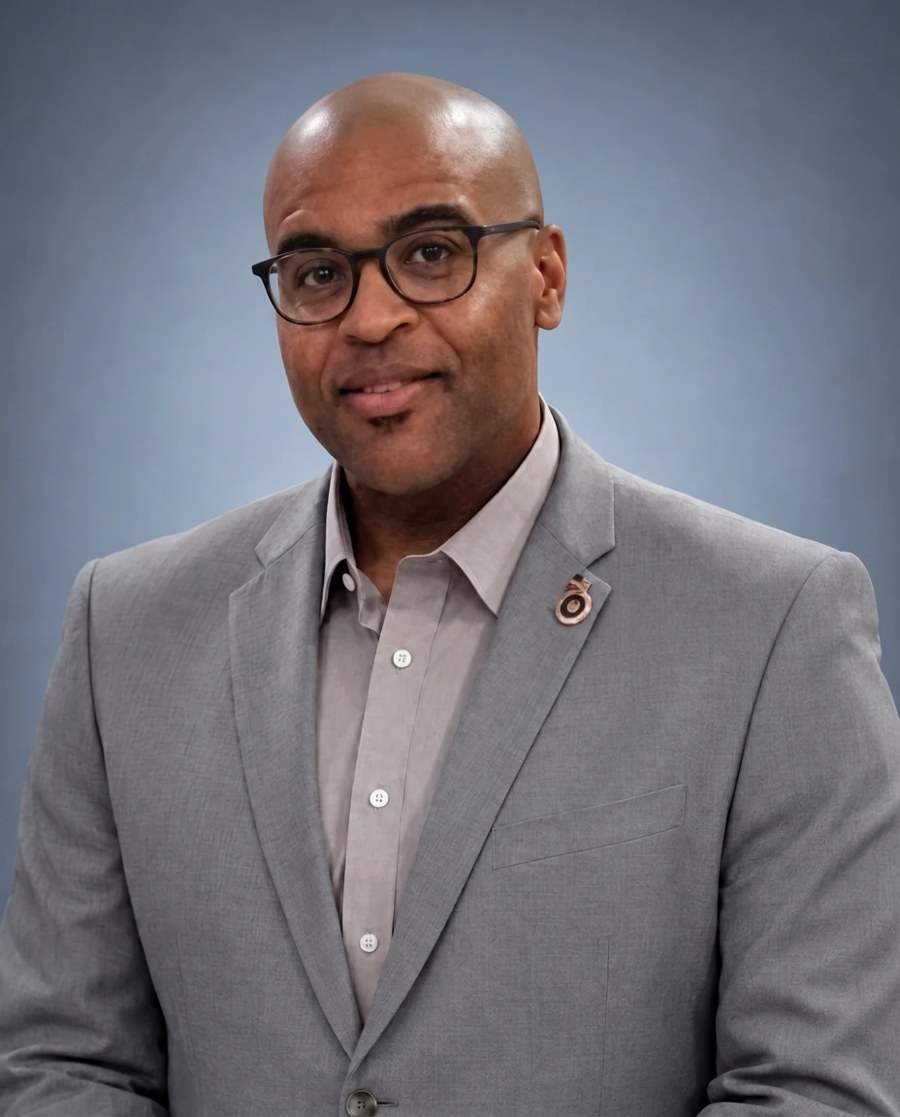
President
Kishon C. Hickman, Sr., EdD
Program Director, Law Enforcement Executive Leadership, Seton Hall University
Founded 1972
The Criminal Justice Educators Association of New York State was founded in 1972. Its members represent a significant number of the colleges and universities in the state that offer criminal justice related programs.
Who We Are
The Criminal Justice Educators Association of New York State was founded in 1972. Its members represent a significant number of the colleges and universities in the state that offer criminal justice related programs.
A Message From Our President
{{ presQuote }}
Criminal justice educators work at an important intersection: between what the justice system asks of its professionals and what the public expects of its institutions. CJEANYS gives us a place to examine that responsibility together, across campuses, disciplines, and professional experiences. I begin this work with deep appreciation for, Karen Wicka whose tremendous dedication, steady leadership, and commitment to our members have sustained CJEANYS. Her work has given us a strong foundation; honoring that legacy means carrying it forward with purpose.
Artificial intelligence makes that work increasingly consequential. A student entering law enforcement today may encounter tools that not only generate reports but may help to inform investigative decisions. Knowing how to operate those tools is not the same as knowing how to assess their reliability. Our teaching must connect technological capability with evidence, constitutional protections, ethical judgment, and accountability. Are the next generation of law enforcement professionals prepared to explain and defend their decisions?
My priorities are to broaden participation amongst New York’s criminal justice programs and make CJEANYS useful between annual conferences. A monthly virtual speaker series in 2027 will bring educators and practitioners into regular conversation. Our journal, newsletter, and revolutionized website can give that conversation continuity by sharing scholarship, classroom practices, and member accomplishments. I also want students and early-career educators to have meaningful opportunities to present, connect with colleagues, and develop their work. For October 2027, our aim is a conference with substantive programming, a range of perspectives, and costs that support participation.
I hold a fervent belief that the quality of criminal justice education matters far beyond the classroom: it shapes how future professionals exercise authority, weigh evidence, and understand their obligations to others. CJEANYS can deepen that education by bringing our members’ scholarship, experience, and perspectives into sustained conversation. I invite you to contribute to that work; not only by sharing what you know, but by helping identify what we still need to understand. Our responsibility is to prepare students whose competence is matched by judgment and whose commitment to public service remains worthy of the trust placed in them.
Dr. Kishon C. Hickman, Sr.
President
About & Regions
CJEANYS is a 501c3 non-profit governed by a thoughtful and dedicated executive board that provides guidance and leadership for the group.
Officers
President
Kishon C. Hickman, Sr., EdD
Program Director, Law Enforcement Executive Leadership, Seton Hall University
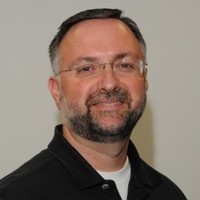
Vice President
John Eterno, PhD
Professor and Director of Graduate Studies in Criminal Justice, Molloy University
jeterno@molloy.edu Learn more on LinkedIn
Secretary
Leigh Martindale
Chair, Criminal Justice, SUNY Broome Community College
martindalelt@sunybroome.edu Learn more on LinkedIn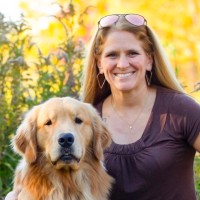
Treasurer
Amy Lupiani, JD, LLM
Associate Professor of Criminal Justice and Paralegal, Bryant & Stratton College
alupiani@bryantstratton.edu Learn more on LinkedIn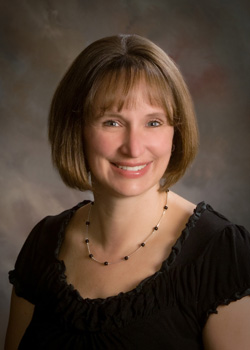
Immediate Past President
Karen K. Wicka, JD
Professor of Criminal Justice, Genesee Community College
kkwicka@genesee.edu Learn more on LinkedInRegion 1 Representative
James Jancewicz
Instructor of Criminal Justice, Genesee Community College
Region 2 Representative
Darin M. Schmidt
Professor of Criminal Justice and Emergency Services, SUNY Broome Community College
Region 3 Representative
Samuel Gonzalez
Instructor, Fulton-Montgomery Community College
Region 5 Representative
Nicholas Thornthwaite
Assistant Professor of Criminal Justice, Jefferson Community College
Region 6 Representative
Oscar Montesdeoca
Adjunct Professor, Kingsborough Community College
Elections Committee Chair
Martin “Marty” Floss, PhD
Professor and Director of Criminal Justice, Hilbert College
Scholarship Coordinator
Shantae Coppock, PhD
Adjunct Professor, Seton Hall University
Director of Social Media and Instructional Technology
Samuel Gonzalez
Instructor, Fulton-Montgomery Community College
Director of Member Publications and Engagement
Karen K. Wicka, JD
Professor of Criminal Justice, Genesee Community College
Select a region
{{ regionName }}
Covering
{{ regionCounties }}
Delegate
{{ regionDelegate }}
{{ regionSchool }}
Institutions in this Region
Blind Peer-Reviewed · Two Volumes Annually
Published on behalf of CJEANYS in collaboration with the NYS Dept. of Criminal Justice Services. A peer-reviewed, bi-monthly publication, offering empirical articles and special issues on contemporary issues and controversies in the study of crime, criminal justice education and criminal-legal system responses.
{{ resultCount }}
The journal engages in a range of theoretical perspectives and methodological approaches to advance understanding of crime and violence, victimization, and criminalization processes and their implications for individuals, the criminal-legal system, and communities.
The Journal of Applied Research in Criminal Justice is published on behalf of the Criminal Justice Educators Association of New York State (CJEANYS).
The journal accepts original research articles, book reviews, and annotated bibliographies. Manuscripts must meet high standards for clarity, grammar, citation, and academic language use.
Peer review is an essential aspect of research journals as it is a quality certification for published papers. This certification allows authors to take pride in their work and assures readers of the content’s credibility.
All research articles in this journal have undergone rigorous peer review, based on initial editor screening and anonymous refereeing by a minimum of two anonymous referees. The journal uses a double-blind peer review process, meaning the author’s identity is kept confidential from the reviewers.
Thank you, {{ fName }}. Your submission {{ fTitle }} has been received and recorded for blind peer review.
The editorial board will contact the corresponding author with a decision after review.
Editor
Martin S. Floss, Ph.D.
Hilbert College, Hamburg, New York
Copy Editor
Tara Kazmark, MS
Hilbert College, Hamburg, New York
Editorial Advisory Board
Events & Scholarships
Membership opens each January, the scholarship closes in August, and the association meets at its annual fall conference.
January
If you are not already a member, please consider joining during our annual membership period in January. Fellow, Associate, Student, Lifetime and Institutional classes are available.
{{ schTimelineTag }}
Students must submit their essay to CJEANYS via the online repository prior to August 15th of the award year.
September 15
The decision is made and the recipient is announced at the annual meeting.
After October 1
Sent to the recipient on proof of registration for the fall semester. No grade requirement.
Fall
Our annual fall conference. Student will receive the scholarship award at the Annual Conference.
Only students registered in CJEANYS member colleges are eligible. We will provide a link on our page with member schools eligible. Member schools can supply link to interested students.
Award ($250) is sent to recipient after October 1st. Student needs proof of registration for fall semester, no grade requirement. Student will receive award at the Annual Conference.
Award is open to all levels, but may only be won once.
Award only given to CJ or CJ related majors (FS/CSI, Criminology…).
Student applying must submit essay to CJEANYS prior to August 15th of the award year (via online repository), decision will be made by September 15th and awarded/announced at the annual meeting. A 500 to 1000 word essay on one of these topics:
What is one major issue facing the criminal justice system today and a potential way to work on that issue?
Why are you enrolled in your field of study and why should you be awarded this scholarship?
All applications and documents are available on our website. All questions may be sent to Kathy Pierino, Scholarship Chair.
Conferences
Dates
Wednesday, October 21
thru Friday, October 23, 2026
Held at
Embassy Suites Buffalo Downtown
200 Delaware Street
Buffalo, NY 14202
Registration for the 2026 conference is now closed. We are no longer accepting new registrations or vendor applications. Questions? Use the Contact page.
Student
$150.00
Early registration
$240.00
Late member rate
$275.00
Vendors
$325.00
Pay by credit or debit card
Already registered? Pay your fee here. All credit/debit card transactions are processed securely through PayPal. You are not required to have a PayPal account.
Pay by check or purchase order
Pay to: CJEANYS
Care of: Amy Lupiani, JD, LLM
15 Airmont Dr
Orchard Park, NY 14127
alupiani@bryantstratton.edu
We encourage members of the community, students and all members of the criminal justice profession to join with us during these various events.
October 21–23, 2026
Embassy Suites Buffalo Downtown, 200 Delaware Street, Buffalo, NY 14202.
Resources
Common links to criminal justice topics and resources.
{{ g.title }}{{ g.count }}
Publications
These items may prove useful for research.
{{ modalDoneText }}
Opens PayPal in a new tab. Credit and debit cards are accepted; a PayPal account is not required.
{{ schClosedText }}
Questions go to Kathy Pierino, Scholarship Chair, at kpierino@hilbert.edu.